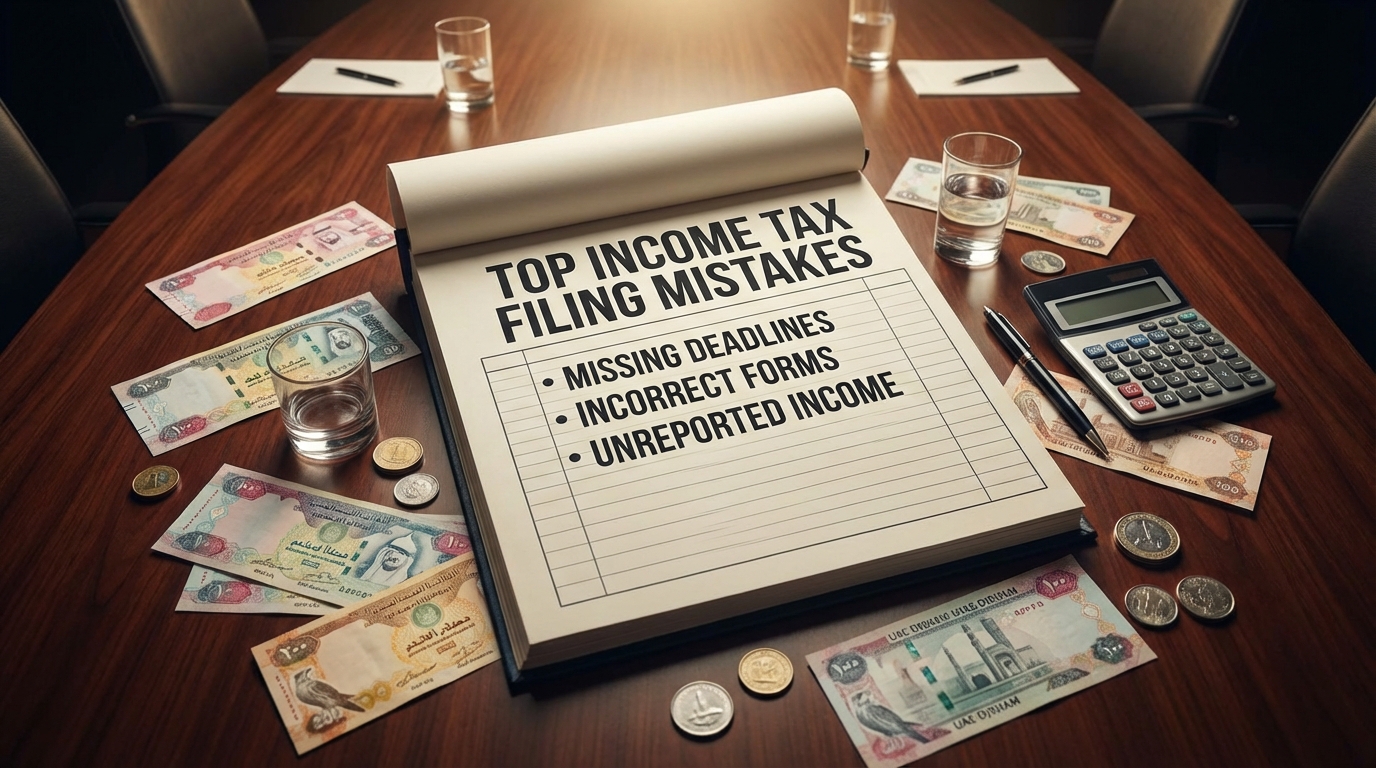
Filing your income tax return often feels like a routine task. For many taxpayers, it is just about entering numbers, submitting the form, and moving on. But even minor mistakes can attract system attention and create avoidable stress later.
One of the most common issues is incomplete income reporting. Many people rely only on Form 16 and forget to include bank interest, fixed deposit income, freelance receipts, or other side earnings. Today, with AIS and Form 26AS, missing income is far easier for the system to detect.
Incorrect deductions are another frequent problem. In the rush to save tax, taxpayers sometimes claim deductions they do not fully understand or cannot support with proper proof. Tax-saving should always be genuine and properly documented.
TDS mismatches also trigger notices very quickly. Sometimes taxpayers claim TDS that is not reflected in government records, or they miss TDS already deducted. Any mismatch between what you claim and what the department sees becomes a red flag.
Basic errors such as the wrong PAN, bank account details, or selecting the wrong ITR form can also create unnecessary complications. These seem small, but they often delay processing or trigger verification.
High-value transactions are another area that gets attention. Property deals, stock activity, large deposits, or heavy credit card spending are all visible in financial reporting systems. If declared income and lifestyle indicators do not align, a notice may follow.
Many notices ultimately come from rushed filing close to the deadline. A few extra minutes spent reviewing figures, reconciling records, and verifying forms can save weeks of stress later.
The goal is not just to file a return. The goal is to file it correctly. Accuracy, honesty, and consistency matter much more than speed.